


Nissan Frontier: Technical and consumer information - Recommended fluids/lubricants and capacities
- Basic information
- Fuel recommendation
- Engine oil and oil filter recommendations
- Air conditioner system refrigerant and oil recommendations
Basic information Nissan Frontier SUV
The capacities listed below are approximate values provided for reference when servicing the Nissan Frontier.
Actual refill amounts may vary slightly depending on operating conditions, component replacement, draining procedures, and residual fluid remaining in the system. When servicing your Nissan Frontier, always follow the procedures described in the "Do-it-yourself" section to verify the correct fluid level and final refill quantity.
Fuel
For detailed fuel specifications and recommendations, refer to the "Fuel recommendation" section of this Nissan Frontier owner's manual.
- Capacity (approximate)
- Metric Measure: 80 L
- US Measure: 21-1/8 gal
- Imperial Measure: 17-5/8 gal
Engine oil drain and refill
- Genuine NISSAN Motor Oil 0W-20 SP or an equivalent product is recommended for optimum Nissan Frontier engine protection and long-term durability.
- If Genuine NISSAN oil is unavailable, a premium synthetic 0W-20 SP GF-6A engine oil may be used as an
alternative.
Damage resulting from the use of engine oils other than those specified by NISSAN may not be covered under the Nissan New Vehicle Limited Warranty.
With oil filter replacement
- Capacity (approximate)
- Metric Measure: 5 L
- US Measure: 5-1/4 qt
- Imperial Measure: 4-3/8 qt
Without oil filter replacement
- Capacity (approximate)
- Metric Measure: 4.7 L
- US Measure: 5 qt
- Imperial Measure: 4-1/8 qt
Engine coolant with reservoir
- Use pre-mixed Genuine NISSAN Long Life Antifreeze/Coolant (Blue) or an approved equivalent coolant.
- Capacity (approximate)
- Metric Measure: 12 L
- US Measure: 3-1/8 gal
- Imperial Measure: 2-5/8 gal
Automatic transmission fluid (ATF)
- Genuine NISSAN Matic P ATF or an equivalent fluid is required.
- NISSAN recommends the exclusive use of Genuine NISSAN Matic P ATF (or equivalent) in Nissan Frontier automatic transmissions. Mixing different transmission fluids is not recommended.
- Using non-equivalent fluids may negatively affect transmission performance, shift quality, and component longevity. Damage caused by the use of non-approved fluids may not be covered by the Nissan New Vehicle Limited Warranty.
Transfer case oil (AWD)
- Genuine NISSAN ATF D3M or equivalent.
- Using fluids other than Genuine NISSAN ATF D3M may reduce transfer case durability, affect drivability, and potentially cause internal damage. Such damage may not be covered by warranty.
- Capacity (approximate)
- Metric Measure: 1.5 L
- US Measure: 1-5/8 qt
- Imperial Measure: 1-3/8 qt
Front final drive oil
- Genuine NISSAN Differential Oil Hypoid Super GL-5 80W-90 or an equivalent conventional (non-synthetic) lubricant.
- NISSAN recommends using this lubricant exclusively in the Nissan Frontier front final drive assembly. Mixing different gear oils is not advised.
- Using fluids that do not meet the specified requirements may reduce component life and lead to premature wear.
- Capacity (approximate)
- Metric Measure: 0.85 L
- US Measure: 1-3/4 qt
- Imperial Measure: 1-1/2 qt
Rear final drive oil
- Genuine NISSAN Differential Oil Hypoid Super-CS GL-5 75W-90 or equivalent.
- NISSAN recommends using Genuine NISSAN Differential Oil Hypoid Super-CS GL-5 75W-90 exclusively in the
rear final drive of the Nissan Frontier.
Do not mix this lubricant with other fluid types. Using unsuitable lubricants may compromise differential operation and long-term durability.
Any damage resulting from the use of non-approved lubricants may not be covered by the Nissan New Vehicle Limited Warranty.
- Capacity (approximate)
- Metric Measure: 2.01 L
- US Measure: 4-1/4 qt
- Imperial Measure: 3-1/2 qt
Power steering fluid (PSF)
- Genuine NISSAN PSF-II or equivalent.
- Using fluids other than Genuine NISSAN PSF-II may affect steering performance and proper operation of the power steering system.
Brake fluid
- Genuine NISSAN Super Heavy Duty Brake Fluid*2 or equivalent DOT 3 brake fluid.
*2: Available through authorized NISSAN dealers in the continental United States.
Multi-purpose grease
- NLGI No. 2 (Lithium Soap Base)
Air conditioning system refrigerant
- HFO-1234yf (R-1234yf)
Air conditioning system oil
- Genuine NISSAN A/C System Oil Type NDOIL12 (PAG) or equivalent.
Windshield-washer fluid
- Genuine NISSAN Windshield Washer Concentrate Cleaner & Antifreeze or equivalent windshield washer solution.
- Capacity (approximate)
- Metric Measure: 4.3 L
- US Measure: 1-1/4 gal
- Imperial Measure: 1 gal
Using the recommended fluids and lubricants helps ensure maximum reliability, optimal performance, and extended service life of critical Nissan Frontier systems, including the engine, transmission, drivetrain, cooling system, steering system, and braking components. Following factory specifications also helps maintain warranty compliance and preserves the vehicle's long-term value.
Fuel recommendation Nissan Frontier 3rd Gen
Basic information
For the Nissan Frontier, use unleaded regular gasoline with an octane rating of at least 87 AKI (Anti-Knock Index), which corresponds to a Research Octane Number of 91.
CAUTION
- Only vehicles that have an E-85 label on the fuel filler door are designed to operate with E-85 fuel. Fuel system damage or other vehicle damage may occur if E-85 is used in a Nissan Frontier that is not specifically built for E-85 operation.
- Using fuel other than the specified type may negatively affect the emission control system and may also affect warranty coverage.
- Leaded gasoline must never be used under any circumstances, because it will damage the three-way catalyst.
- Do not use fuel containing more than 15% ethanol in your Nissan Frontier. This vehicle is not
designed to operate on fuel with an ethanol content above 15%.
Using fuel containing more than 15% ethanol in a vehicle not specifically engineered for such fuel can damage or adversely affect emission control devices and related systems.
Damage caused by this type of fuel is not covered by the NISSAN New Vehicle Limited Warranty.
- Do not use fuel that contains the octane booster methylcyclopentadienyl manganese tricarbonyl (MMT).
Fuel containing MMT may negatively affect Nissan Frontier performance and emissions. Not every fuel pump is labeled to show MMT content, so you may need to ask the gasoline retailer for details. Federal and California laws prohibit the use of MMT in reformulated gasoline.
- U.S. government regulations require ethanol fuel dispensing pumps to be identified by a small square orange and black label showing the common abbreviation or the appropriate ethanol percentage for that region.
Gasoline specifications
NISSAN recommends using gasoline that meets World-Wide Fuel Charter (WWFC) specifications where available. These specifications were developed by many automobile manufacturers to help improve emission control system performance, engine operation, and fuel quality consistency. Ask the service station manager whether the gasoline meets WWFC specifications.
Reformulated gasoline
Some fuel suppliers produce reformulated gasoline designed to help reduce vehicle emissions.
NISSAN supports efforts toward cleaner air and recommends using reformulated gasoline when it is available and compatible with your Nissan Frontier.
Gasoline containing oxygenates Some fuel suppliers sell gasoline blended with oxygenates such as ethanol, Methyl Tert-butyl Ether (MTBE), or methanol, sometimes without clearly advertising their presence.
NISSAN does not recommend using fuels when the oxygenate content or compatibility with your Nissan Frontier cannot be readily determined. If you are unsure, ask the service station manager before refueling.
If oxygenate-blend gasoline is used, follow the precautions below because these fuels may cause drivability concerns and/or fuel system damage if they are not properly formulated.
- The fuel must be unleaded and must have an octane rating no lower than the recommended rating for unleaded gasoline.
- If an oxygenate blend other than a methanol blend is used, it should contain no more than 15% oxygenate.
- If a methanol blend is used, it should contain no more than 5% methanol (methyl alcohol, wood
alcohol). It must also contain suitable cosolvents and corrosion inhibitors. Without the correct
additives, methanol blends may damage the fuel system and/or cause Nissan Frontier performance
problems.
At this time, there is not enough data to confirm that all methanol blends are suitable for use in NISSAN vehicles.
If drivability problems such as engine stalling, hesitation, rough running, or difficult hot starting occur after using oxygenate-blend fuel, switch immediately to a non-oxygenate fuel or a fuel with a low MTBE blend.
Take care not to spill gasoline during refueling.
Gasoline containing oxygenates can damage painted surfaces if spilled and not cleaned promptly.
E-15 fuel
E-15 fuel is a mixture of approximately 15% fuel ethanol and 85% unleaded gasoline.
E-15 may only be used in vehicles designed to operate on E-15 fuel. U.S. government regulations require ethanol dispensing pumps to display a small square orange and black label showing the common abbreviation or the appropriate percentage for that region.
E-85 fuel
E-85 fuel is a mixture of approximately 85% fuel ethanol and 15% unleaded gasoline.
E-85 may only be used in a Flexible Fuel Vehicle (FFV). Do not use E-85 in your Nissan Frontier unless the vehicle is specifically identified as compatible with E-85.
U.S. government regulations require ethanol dispensing pumps to be identified by a small square orange and black label showing the common abbreviation or the appropriate ethanol percentage for that region.
Fuel containing MMT
MMT, or methylcyclopentadienyl manganese tricarbonyl, is an octane-boosting additive used in some fuels.
NISSAN does not recommend using fuel that contains MMT. This type of fuel may adversely affect Nissan Frontier performance and the emission control system. Some fuel pumps may identify MMT content, but not all do, so ask your gasoline retailer if you need confirmation.
Aftermarket fuel additives
NISSAN does not recommend using aftermarket fuel additives such as fuel injector cleaners, octane boosters, intake valve deposit removers, or similar commercially sold products. Many of these additives are designed to remove gum, varnish, or deposits and may contain active solvents or other ingredients that can be harmful to the Nissan Frontier fuel system and engine.
Octane rating tips
Using unleaded gasoline with an octane rating lower than recommended may cause persistent heavy "spark knock." Spark knock is a metallic rapping or pinging noise. If severe, it can lead to engine damage. If you hear persistent heavy spark knock even when using gasoline with the recommended octane rating, or if steady spark knock occurs while driving at a constant speed on level roads, it is recommended that you have a NISSAN dealer correct the condition. Failure to correct this condition is considered vehicle misuse, for which NISSAN is not responsible.
Incorrect ignition timing may cause spark knock, after-run, overheating, excessive fuel consumption, or engine damage. If any of these symptoms occur, have your Nissan Frontier inspected. It is recommended that you visit a NISSAN dealer for service.
Occasional light spark knock for a short time during acceleration or while climbing hills is not normally a cause for concern. Under heavy engine load, brief light spark knock may occur while the engine is operating efficiently.
Using the correct fuel helps the Nissan Frontier maintain smooth performance, reliable starting, proper emissions operation, and long-term engine durability. Always choose fuel that meets NISSAN recommendations and avoid fuels or additives that may damage the fuel system.
Engine oil and oil filter recommendations Nissan Frontier 3rd Gen
Selecting the correct oil
Choosing the proper engine oil is one of the most important factors in maintaining the long-term durability, efficiency, and performance of your Nissan Frontier. The correct oil grade, quality level, and viscosity help protect internal engine components from wear while ensuring reliable lubrication under a wide range of operating conditions.
For additional specifications, refer to the section titled "Recommended fluids/lubricants and capacities." Nissan recommends the use of energy-conserving engine oils to help improve fuel economy while maintaining excellent engine protection.
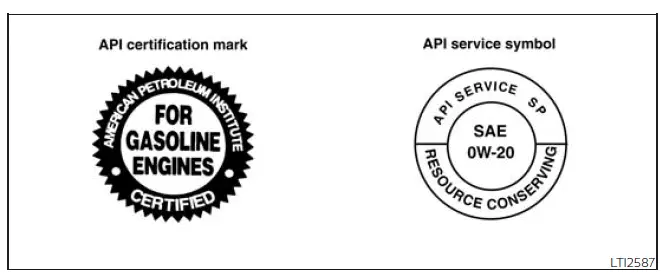
Always select engine oils that meet the latest American Petroleum Institute (API) certification requirements or International Lubricant Standardization and Approval Committee (ILSAC) standards, as well as the specified SAE viscosity rating for your Nissan Frontier.
Approved oils display the official API certification mark on the front label of the container. Engine oils that do not carry the required certification should not be used, as they may provide inadequate lubrication and could contribute to premature engine wear or serious engine damage over time.
Using the correct lubricant helps ensure smooth operation, improved cold-weather starting performance, enhanced fuel efficiency, and extended engine service life for your Nissan Frontier.
Oil additives
NISSAN does not recommend the use of aftermarket oil additives. When the correct engine oil is used and maintenance intervals are followed according to the recommended schedule, additional additives are unnecessary.
Some aftermarket additives may alter the chemical balance of the engine oil and could reduce the effectiveness of the lubricant package designed by the oil manufacturer.
Engine oil that contains foreign contaminants, dirt, moisture, or oil that has previously been used should never be installed in your Nissan Frontier engine.
Oil viscosity
Engine oil viscosity, often referred to as oil thickness, changes depending on ambient temperature. Because operating temperatures vary significantly throughout the year, it is important to select the recommended oil viscosity for the environmental conditions in which your Nissan Frontier will be driven before the next oil change interval.
Using an oil viscosity other than the recommended specification may reduce lubrication performance during startup, increase internal engine wear, affect fuel economy, and in severe cases contribute to engine damage.
Modern Nissan Frontier engines are engineered with precise internal tolerances that rely on properly specified oil viscosity to deliver maximum protection and performance under all driving conditions.
Selecting the correct oil filter
Your Nissan Frontier is equipped from the factory with a high-quality Genuine NISSAN oil filter specifically designed to provide efficient filtration and proper oil flow characteristics.
Whenever the oil filter is replaced, NISSAN recommends using a Genuine NISSAN oil filter or an equivalent filter that meets or exceeds original equipment specifications.
A properly designed oil filter helps trap harmful contaminants, metal particles, and combustion by-products before they circulate through the engine. Using an inferior filter may reduce filtration efficiency and negatively affect engine durability.
Change intervals
The recommended oil and oil filter replacement intervals for your Nissan Frontier are based on the use of approved engine oils and filters that meet NISSAN quality standards.
Using engine oil or filters that fail to meet these standards, or exceeding the recommended maintenance intervals, may shorten engine life and could result in severe engine damage.
Any damage resulting from improper maintenance practices, incorrect oil viscosity, non-approved lubricants, or low-quality filters is not covered by the NISSAN New Vehicle Limited Warranty.
Your Nissan Frontier engine was factory-filled with premium-quality engine oil. There is no requirement to change the oil before the first scheduled maintenance interval unless operating conditions specifically require it.
Oil and filter replacement schedules depend largely on vehicle usage patterns, driving environments, and operating conditions.
NISSAN recommends the use of Genuine NISSAN replacement parts or equivalent components that meet or exceed factory specifications. Parts that do not meet NISSAN standards may adversely affect reliability, performance, and warranty coverage.
For the most accurate replacement parts information, it is recommended that you contact a NISSAN dealer parts department. Dealer personnel can help identify the correct components specifically engineered for your Nissan Frontier model and engine configuration.
Operation of the Nissan Frontier under the following conditions may require more frequent engine oil and oil filter replacement:
- Frequent short-distance driving during cold weather conditions where the engine does not fully reach operating temperature.
- Driving in dusty, sandy, or off-road environments where airborne contaminants are more prevalent.
- Extended periods of engine idling.
- Regular towing of trailers, campers, or heavy loads.
- Frequent stop-and-go city driving and heavy commuter traffic.
For complete maintenance requirements and interval information, refer to the "Maintenance and schedules" section of this manual.
Following the recommended oil and filter maintenance schedule helps maximize Nissan Frontier engine longevity, maintain optimal fuel efficiency, reduce internal engine wear, and ensure dependable performance throughout the life of the vehicle.
Air conditioner system refrigerant and oil recommendations Nissan Frontier SUV
The air conditioning system in your Nissan Frontier must be charged only with HFO-1234yf (R-1234yf) refrigerant and NISSAN A/C System Oil Type ND-OIL12 (PAG), or exact equivalent products that meet the same specifications.
CAUTION
Using any refrigerant or compressor oil other than the specified type will cause severe air conditioning system damage and may require replacement of all A/C system components.
The HFO-1234yf (R-1234yf) refrigerant used in your Nissan Frontier does not damage the earth’s ozone layer. However, even though this refrigerant is designed to be more environmentally responsible, government regulations require proper recovery and recycling during automotive air conditioner service. The air conditioning system should only be serviced by trained and certified technicians to ensure safe and correct operation according to SAE J2845. A NISSAN dealer has the specialized equipment and trained personnel needed to recover, recycle, and recharge the Nissan Frontier air conditioner refrigerant properly. Only new evaporators certified to SAE J2842 should be used as replacement parts.
A damaged or leaking air conditioning evaporator must never be repaired or replaced with a part removed from a used or salvaged vehicle. When an evaporator replacement is required, use only a new SAE J2842 certified evaporator. It is recommended that you visit a NISSAN dealer for Nissan Frontier air conditioning system service.