


Nissan Frontier: Safety - Seats, Seat Belts and Supplemental Restraint System - Seat Belts
- Precautions on Seat Belt Usage
- Seat Belt Warning Light and Chime
- Three-point type seat belt with retractor
Precautions on Seat Belt Usage Nissan Frontier 2026
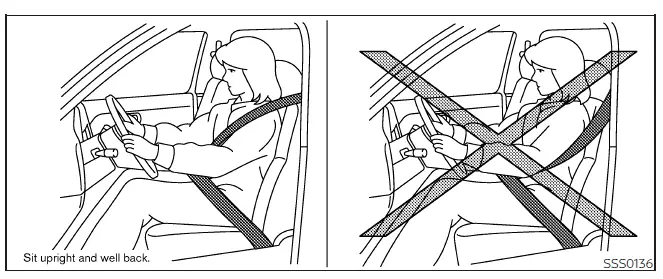
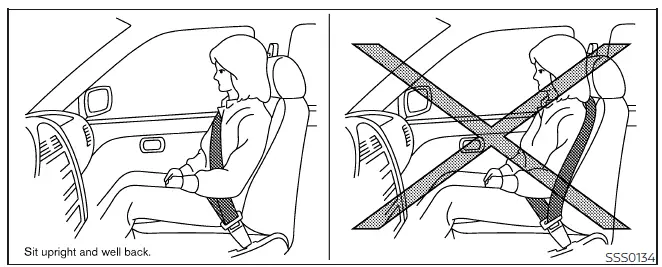
When the seat belt is worn correctly, adjusted properly, and the occupant is seated upright with both feet on the floor and their back fully against the seatback, the likelihood of serious injury or death during a collision can be significantly reduced. The Nissan Frontier is equipped with advanced safety systems, but these systems are most effective when used together with properly fastened seat belts.
NISSAN strongly recommends that every driver and passenger in the Nissan Frontier wear a seat belt during every trip, regardless of travel distance or seating position. Even occupants protected by supplemental air bags should always remain properly restrained.
Most U.S. states and Canadian provinces or territories require that seat belts be worn whenever a vehicle is in motion.
WARNING
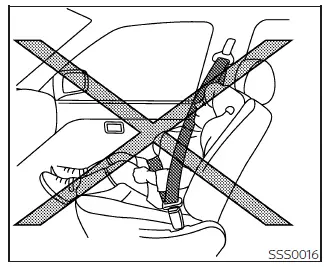
- Every person operating or riding in a Nissan Frontier should wear a seat belt at all times. Children should always ride in the rear seating area and be secured using an appropriate child restraint system that matches their size, age, and weight.
WARNING
- The seat belt must always be adjusted to fit snugly against the body. A loose or improperly positioned seat belt may reduce the effectiveness of the restraint system and increase the likelihood or severity of injury during a crash. Serious injury or death can occur if a seat belt is not worn correctly.
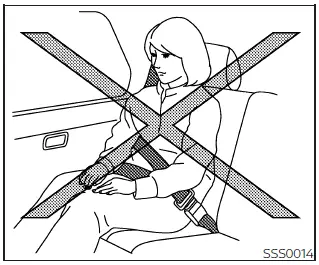
WARNING
- Always position the shoulder belt across the center of your shoulder and chest.
Never place the shoulder belt behind your back, underneath your arm, or across your neck.
The belt should remain clear of your face and neck while staying securely positioned on your shoulder.
- Position the lap belt as low and snug as possible across the hips, never across the waist. A lap belt worn too high may increase the risk of internal injuries during an accident.
- Ensure that the seat belt tongue is securely inserted into the correct buckle and that it is fully latched before driving.
- Never wear a seat belt that is twisted or turned inside out. A twisted belt may not provide the intended level of protection during an impact.
- Only one occupant should use each seat belt. Sharing a seat belt between multiple passengers is extremely dangerous and can result in severe injuries.
- Never transport more passengers in the Nissan Frontier than there are available seating positions and seat belts.
- If the seat belt warning light remains illuminated or the warning chime continues after all occupants have fastened their seat belts, all doors are closed, and the ignition is ON, this may indicate a malfunction within the system. Have the system inspected as soon as possible. It is recommended that you visit a NISSAN dealer for diagnosis and repair.
- Do not modify, alter, or tamper with any component of the seat belt system. This includes adding materials, accessories, clips, or devices that could affect seat belt routing, tension, or operation. Unauthorized modifications may compromise occupant protection and lead to serious personal injury.
- Once the seat belt pretensioner system has activated during a collision, the affected components cannot be reused. The pretensioner and retractor assemblies must be replaced. It is recommended that this service be performed by a NISSAN dealer.
- All seat belt assemblies, including retractors, buckles, anchors, and related hardware, should be
thoroughly inspected following any collision.
It is recommended that you visit a NISSAN dealer for a complete inspection.
NISSAN recommends replacing all seat belt assemblies that were in use during a collision unless the impact was minor and the belts show no signs of damage while continuing to function correctly. Seat belt assemblies that were not in use should also be inspected and replaced if any damage or abnormal operation is detected.
- All child restraint systems and their attachment hardware should be inspected after any collision. Always
follow the child restraint manufacturer's inspection procedures and replacement recommendations.
Any child restraint that has been damaged or may have been compromised during an accident should be replaced immediately to maintain proper protection for young passengers.
Proper seat belt use remains one of the most important safety practices for Nissan Frontier drivers and passengers. Combined with air bags, head restraints, and other occupant protection technologies, correctly worn seat belts help maximize safety and reduce the risk of injury in a wide range of driving situations.
Seat Belt Warning Light and Chime Nissan Frontier 2022
The Nissan Frontier is equipped with a seat belt reminder system designed to help improve occupant safety by encouraging all passengers to fasten their seat belts before and during travel. The warning light and audible chime work together to alert the driver whenever a seat belt is not properly secured.
A combination of visual and audible alerts may operate under the following circumstances:
- If the driver's seat belt remains unfastened.
- If the front passenger seat is occupied and the passenger seat belt is not fastened within approximately 7 seconds after the ignition switch is placed in the ON position.
- If the front passenger seat belt is not fastened and the occupant classification system detects weight, pressure, or external forces that cause the seat to be recognized as occupied.
- If any rear passenger seat belt changes from a fastened condition to an unfastened condition while the vehicle is being used.
The Nissan Frontier seat belt reminder system is designed to provide an additional level of safety awareness and to help ensure that all occupants remain properly restrained during every journey.
For additional information, see:
- "Seat belt warning light and chime"
- "Rear seat belt warning"
The following situations may cause the front passenger seat belt reminder to activate even when no passenger is seated in the front passenger position:
- Heavy objects placed on the passenger seat.
- Someone pushing, leaning on, or pulling the front passenger seat.
- An object stored beneath the front passenger seat.
- An item positioned between the seat cushion and the center console, or between the seat cushion and the door.
- Objects hanging from the seat or stored in the seatback pocket.
- A child restraint system or another object pressing against the rear portion of the seatback.
In certain situations, the rear seat belt reminder system of the Nissan Frontier may also operate when rear seat belts are fastened or unfastened without passengers actually occupying the rear seating positions.
To ensure proper operation of the reminder system, avoid placing heavy or bulky items on occupied-sensing seats whenever possible.
Pregnant Women
NISSAN strongly recommends that pregnant women continue to wear seat belts throughout pregnancy unless otherwise directed by a healthcare professional. The seat belt should fit snugly and comfortably at all times.
Position the lap belt as low as possible across the hips and pelvic area, never across the abdomen or waist. The shoulder belt should pass over the shoulder and across the center of the chest. Never route the lap or shoulder belt directly over the stomach area.
Proper seat belt use in a Nissan Frontier can help provide important protection for both the mother and unborn child during sudden stops or collisions. Pregnant occupants should consult their physician for recommendations specific to their individual circumstances.
Injured Persons
NISSAN recommends that injured individuals wear seat belts whenever possible while traveling in the vehicle.
Depending on the nature and severity of the injury, specific seat belt positioning or medical guidance may be required. Consult a physician regarding the safest method of transportation and restraint use.
Even when recovering from an injury, properly wearing a seat belt in a Nissan Frontier remains one of the most effective ways to reduce the risk of further injury during vehicle operation.
id="n7kq2s"Three-point type seat belt with retractor Nissan Frontier D41
Basic Information
WARNING
- Every person who drives or rides in the Nissan Frontier should wear a seat belt at all times whenever the vehicle is moving. Children must ride in the rear seating area and must be secured in a child restraint system appropriate for their age, height, and weight.
- Never ride in a moving vehicle with the seatback excessively reclined. This seating position can be
dangerous because the shoulder belt may not rest properly against your body. In a collision, you could
be thrown into the belt and suffer serious neck, chest, or upper-body injuries.
You may also slide underneath the lap belt, which can cause severe internal injuries.
- For the most effective protection while the Nissan Frontier is in motion, the seatback should remain upright. Always sit well back in the seat, keep both feet on the floor, and adjust the seat belt so it fits correctly across your body.
- Do not allow children to play with seat belts. Most seating positions are equipped with Automatic Locking
Retractor (ALR) mode seat belts. If a seat belt becomes wrapped around a child's neck while ALR mode is
activated, the belt may retract and tighten, which can cause serious injury or death. This danger can
occur even when the Nissan Frontier is parked.
Unbuckle the seat belt immediately to release the child. If the belt cannot be unbuckled, or if it is already unbuckled but remains tight, release the child by cutting the belt with a suitable tool, such as a knife or scissors.
Fastening the seat belts
1. Adjust the seat to the proper position before fastening the belt. On King Cab models, open the jump seat before using the seat belt.
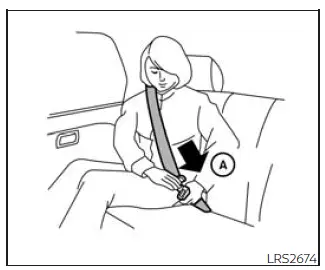
2. Slowly pull the seat belt from the retractor and insert the tongue into the buckle A until you hear and feel the latch securely engage.
- The retractor is designed to lock during sudden braking, rapid vehicle deceleration, or certain
impacts.
When the belt is pulled out slowly, it moves freely and allows normal occupant movement while seated.
- If the seat belt cannot be pulled from its fully retracted position, pull the belt firmly and then
release it.
After that, draw the belt out smoothly from the retractor.
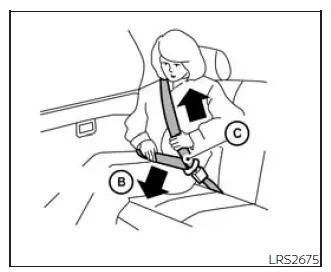
3. Place the lap belt section low and snug across the hips B, as shown in the illustration. The lap belt should never sit high across the waist.
4. Pull the shoulder belt portion toward the retractor to remove any extra slack C. Make sure the shoulder belt passes over your shoulder and across the center of your chest.
Correct belt positioning is essential for the Nissan Frontier restraint system to work as intended. A properly fitted three-point seat belt helps distribute crash forces across stronger areas of the body and can reduce the risk of serious injury.
The three-point seat belts for the front passenger seat, rear seating positions, and jump seat position have two operating modes:
- Emergency Locking Retractor (ELR)
- Automatic Locking Retractor (ALR)
The ELR mode allows the seat belt to extend and retract normally, giving the driver and passengers a comfortable range of movement while seated. The ELR function locks the belt when the Nissan Frontier slows suddenly, brakes hard, or is involved in certain types of impacts.
The ALR mode, also known as child restraint mode, locks the seat belt for proper child restraint installation.
When ALR mode is activated, the seat belt cannot be extended again until the seat belt tongue is removed from the buckle and the belt is allowed to retract completely. Once the belt fully retracts, it automatically returns to ELR mode.
The ALR mode should be used only when installing a child restraint system. During normal seat belt use by an adult or older child occupant, ALR mode should not be activated. If activated unnecessarily, it may create uncomfortable belt tension and may also affect the operation of the front passenger air bag system.
WARNING
Before fastening the seat belts, always make sure the seatbacks are completely secured in the latched position. If a seatback is not fully locked, passengers may be injured during a sudden stop, emergency maneuver, or collision.
For everyday Nissan Frontier driving, check that each occupant is properly seated and that every seat belt is fastened, untwisted, and positioned correctly before the vehicle begins moving.
Unfastening the seat belts
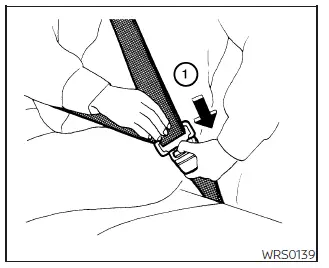
To release the seat belt in the Nissan Frontier, press the button on the buckle marked as 1. Once the buckle is released, guide the belt carefully and allow it to retract smoothly into its housing. The seat belt is designed to rewind automatically, but it should not be twisted, trapped, or allowed to snap back forcefully against the trim.
Checking seat belt operation
The seat belt retractors in the Nissan Frontier are engineered to help control belt movement and lock when needed. This locking function is part of the restraint system and is designed to respond in two main situations:
- When the seat belt is pulled sharply or suddenly from the retractor.
- When the Nissan Frontier slows down rapidly, such as during hard braking or a collision-type deceleration. To feel more confident that the seat belts are operating correctly, you can perform a simple check as described below.
- Hold the shoulder belt firmly and pull it forward with a quick, decisive motion. The retractor should lock immediately and prevent the belt from extending farther.
If the retractor does not lock during this check, the seat belt system should be inspected before relying on it in daily driving. It is recommended that you visit a NISSAN dealer for this service, or for additional guidance about proper Nissan Frontier seat belt operation and restraint system safety.
Shoulder belt height adjustment (front seats)
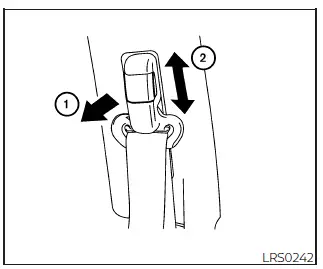
The front-seat shoulder belt anchor height should be adjusted to a position that fits the occupant correctly. In the Nissan Frontier, proper belt routing helps the restraint system work as intended and improves comfort during normal driving.
To adjust the height, pull out the adjustment button 1 and move the shoulder belt anchor to the desired position 2. The belt should pass across the center of the shoulder, not against the face or neck, and it should not sit so far outward that it slips off the shoulder. After choosing the correct position, release the adjustment button so the shoulder belt anchor locks securely in place.
WARNING
- After making the adjustment, release the adjustment button and move the shoulder belt anchor up and down to confirm that it is fully locked and securely fixed in position.
- The shoulder belt anchor height must be set to the position that best suits the occupant. If the belt is not routed correctly, the effectiveness of the entire restraint system may be reduced, increasing the risk or severity of injury in an accident.
Seat belt extenders
If body size, seating position, or another fit-related factor prevents the lap/shoulder belt from fastening properly, a compatible seat belt extender may be available for purchase. The extender adds approximately 8 in (200 mm) of length and may be used for either the driver or the front passenger seating position in the Nissan Frontier.
It is recommended that you visit a NISSAN dealer for assistance if a seat belt extender is required. A dealer can help ensure that the extender is compatible with the installed seat belts and is suitable for the intended seating position.
WARNING
- Only NISSAN seat belt extenders made by the same company that manufactured the original equipment seat belts should be used with NISSAN seat belts.
- Adults and children who can correctly use the standard seat belt should not use an extender. Unnecessary use of an extender may increase the risk of serious personal injury in the event of an accident.
- Never use a seat belt extender to install a child restraint. If the child restraint is not secured properly, the child could be seriously injured or killed during a collision or sudden stop.
Seat belt maintenance
- To clean the seat belt webbing, use a mild soap solution or a cleaner recommended for upholstery or carpet. Wipe the webbing with a cloth and allow the seat belts to dry naturally in the shade. Do not let the belts retract until they are completely dry, as moisture inside the retractor area may affect smooth operation.
- If dirt, dust, or debris collects in the shoulder belt guide near the seat belt anchors, the belts may retract more slowly than normal. Wipe the shoulder belt guide with a clean, dry cloth to help maintain proper movement.
- Periodically inspect the seat belt webbing and all metal components, including buckles, tongues, retractors, flexible wires, and anchors. If you notice looseness, deterioration, cuts, fraying, or any other damage to the webbing or hardware, the entire seat belt assembly should be replaced. Keeping the Nissan Frontier restraint system in good condition is essential for driver and passenger safety.