


Nissan Frontier: Technical and consumer information - Towing a trailer
Basic information Nissan Frontier D41
WARNING
- Overloading a trailer or loading trailer cargo incorrectly can seriously affect Nissan Frontier handling, braking, stability, and performance, increasing the risk of an accident.
- Do not tow a trailer when the TEMPORARY FULL SIZE spare tire is installed.
- If you have a crew cab SV Long wheel base model, do not remove or replace the trailer hitch. Removing
or replacing the hitch from the vehicle:
- Creates a risk of a thermal event and serious injury or death in a crash.
- Makes the vehicle non-compliant with applicable Federal Motor Vehicle Safety Standards.
CAUTION
- Do not tow a trailer or haul a heavy load during the first 500 miles (805 km) of Nissan Frontier
operation.
The engine, axle, drivetrain, or other vehicle components could be damaged if heavy loads are applied too early.
- During the first 500 miles (805 km) of trailer towing, do not drive faster than 50 mph (80 km/h), and avoid full-throttle starts. This helps the engine, drivetrain, axle components, and other systems wear in properly under heavier towing loads.
Your new Nissan Frontier was engineered primarily to carry passengers and cargo, while also offering towing capability when used within the specified limits.
Remember that towing a trailer places additional demand on the engine, transmission, drivetrain, steering system, brakes, suspension, tires, and cooling system. Always tow carefully and allow extra distance for acceleration, turning, and braking.
A NISSAN Towing Guide (U.S. only) is available on the website at www.nissanusa.com.
This guide provides additional information about trailer towing capability, recommended towing practices, and special equipment required for safe and proper towing with the Nissan Frontier.
Maximum load limits Nissan Frontier D41
Maximum trailer loads
Never allow the total trailer load behind your Nissan Frontier to exceed the value listed in the "Towing Load/Specification" chart provided in this section.
The total trailer load is the combined weight of the trailer itself plus everything loaded inside or on the trailer.
- When towing a trailer load of 3,500 lbs. (1,587 kg) or more, a trailer equipped with its own brake system MUST be used.
The maximum Gross Combined Weight Rating (GCWR) must not exceed the value specified in the following "Towing Load/Specification" chart for the Nissan Frontier.
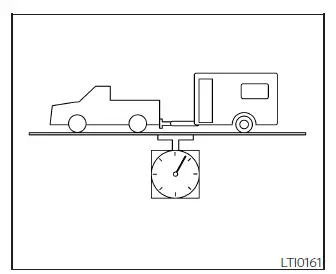
The GCWR is the combined weight of the towing vehicle, including passengers, cargo, optional equipment, and the total trailer load. Towing loads above these limits, or using unsuitable towing equipment, can negatively affect Nissan Frontier handling, braking ability, acceleration, stability, and overall performance.
The towing capability of your Nissan Frontier depends not only on the maximum trailer load rating, but also on the conditions and locations where you plan to tow.
Trailer weights that may be suitable for level highway driving may need to be reduced in low-traction conditions, such as slippery boat ramps, loose gravel, wet roads, snow, or uneven surfaces.
Weather and temperature also influence towing performance. For example, towing a heavy trailer in high outside temperatures on long grades can increase engine load and may lead to overheating. The engine protection mode, which helps reduce the chance of engine damage, may activate and automatically reduce engine power. Under heavy load, vehicle speed may decrease. Plan every towing trip carefully by considering trailer weight, vehicle load, outside temperature, road grade, traffic, and driving conditions.
WARNING
Overheating may reduce engine power and vehicle speed. The reduced speed of the Nissan Frontier may be lower than surrounding traffic, increasing the risk of a collision. Use extra caution when towing under demanding conditions. If the vehicle cannot maintain a safe speed, move to the side of the road in a safe location. Allow the engine to cool and return to normal operation before continuing.
CAUTION
Vehicle damage caused by improper towing methods, excessive trailer weight, incorrect loading, or unsuitable towing equipment is not covered by NISSAN warranties.
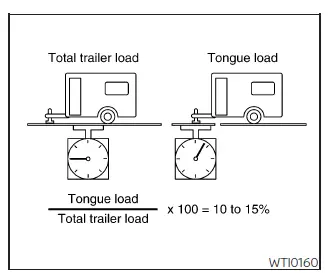
Tongue load
When using a weight-carrying hitch or a weight-distributing hitch with the Nissan Frontier, keep the trailer tongue load between 10 - 15% of the total trailer load, unless the trailer manufacturer specifies a different required tongue load. The tongue load must remain within the maximum tongue load limits shown in the following "Towing Load/Specification" chart. If the tongue load is too high or too low, rearrange the trailer cargo to achieve proper balance and safe towing behavior.
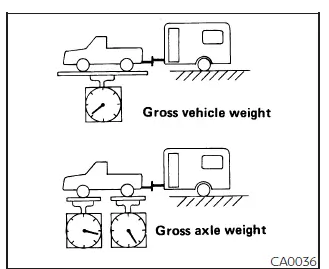
Maximum Gross Vehicle Weight (GVW)/maximum Gross Axle Weight (GAW)
The Gross Vehicle Weight (GVW) of the towing vehicle must never exceed the Gross Vehicle Weight Rating (GVWR) shown on the F.M.V.S.S./C.M.V.S.S.
certification label. GVW is the combined weight of the unloaded Nissan Frontier, passengers, luggage, cargo, hitch equipment, trailer tongue load, and any other optional equipment installed on the vehicle. In addition, the front or rear Gross Axle Weight (GAW) must not exceed the Gross Axle Weight Rating (GAWR) shown on the F.M.V.S.S./C.M.V.S.S. certification label.
Towing capacities are calculated based on a base vehicle with a driver and any equipment required to reach the stated rating. Extra passengers, cargo, accessories, and optional equipment, including the trailer hitch, add weight to the Nissan Frontier and reduce the maximum available towing capacity as well as the allowable trailer tongue load. Always calculate the actual load before towing, not just the advertised maximum rating.
The Nissan Frontier and the trailer should both be weighed to confirm that the vehicle remains within the approved GVWR, Front GAWR, Rear GAWR, Gross Combined Weight Rating (GCWR), and towing capacity limits.
All vehicle and trailer weights can be checked using platform-type scales commonly available at truck stops, highway weigh stations, building supply centers, recycling facilities, or salvage yards.
To determine the available payload capacity for trailer tongue load on your Nissan Frontier, use the following procedure.
1. Locate the GVWR on the F.M.V.S.S./C.M.V.S.S. certification label.
2. Weigh your Nissan Frontier on a scale with all passengers, cargo, hitch equipment, and normal towing items loaded in the vehicle exactly as they would be during trailer towing.
3. Subtract the actual measured vehicle weight from the GVWR. The remaining amount is the available maximum tongue load.
To determine the available towing capacity, use the following procedure.
1. Find the GCWR for your Nissan Frontier in the "Towing Load/Specification" chart provided in this section.
2. Subtract the actual measured vehicle weight from the GCWR. The remaining amount is the available maximum towing capacity.
To determine the Gross Trailer Weight, weigh the trailer on a scale with all equipment, supplies, and cargo that would normally be inside or on the trailer while towing. Confirm that the Gross Trailer Weight does not exceed the Gross Trailer Weight Rating shown on the trailer and does not exceed the calculated available maximum towing capacity for the Nissan Frontier.
Also weigh the front and rear axles separately on the scale to confirm that the Front Gross Axle Weight and Rear Gross Axle Weight do not exceed the Front GAWR and Rear GAWR shown on the F.M.V.S.S./C.M.V.S.S. certification label. Cargo in the trailer or vehicle may need to be moved, redistributed, or removed to keep all weights within the specified ratings.
Example:
- Gross Vehicle Weight (GVW) as measured on a scale, including passengers, cargo, and hitch equipment - 5,185 lbs. (2352 kg).
- Gross Vehicle Weight Rating (GVWR) from the F.M.V.S.S./C.M.V.S.S. certification label - 5,815 lbs. (2638 kg).
- Gross Combined Weight Rating (GCWR) from the "Towing Load/Specification" chart - 11,133 lbs. (5050 kg).
- Maximum trailer towing capacity from the "Towing Load/Specification" chart - 6,100 lbs. (2767 kg).
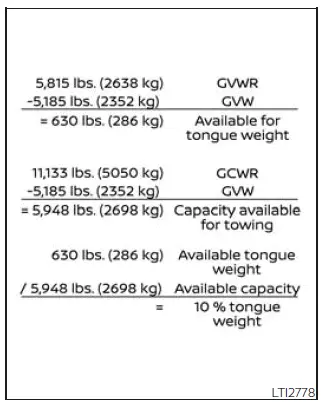
The actual available towing capacity may be lower than the listed maximum towing capacity because passengers, cargo, hitch equipment, and accessories inside the Nissan Frontier add weight to the vehicle.
Remember to keep the trailer tongue weight between 10 - 15 percent of the trailer weight, or within the trailer tongue load specification recommended by the trailer manufacturer.
If the tongue load is excessive, rearrange the trailer cargo to achieve the correct tongue load. Do not exceed the maximum tongue weight specification shown in the "Towing Load/Specification" chart, even if the calculated available tongue weight is greater than 15 percent. If the calculated tongue weight is less than 10 percent, reduce the total trailer weight so it matches the available tongue weight safely.
Always verify that all available capacities are within the required ratings before towing with the Nissan Frontier. Careful weighing and load distribution help maintain safe handling, predictable braking, proper tire performance, and long-term durability of the vehicle and trailer combination.
Towing load/specification Nissan Frontier
WARNING
The towing capacities listed in this manual for the Nissan Frontier are provided for general reference only and must not be treated as a substitute for actual weighing and load verification.
The safe towing capacity of your Nissan Frontier is affected by factory-installed equipment, dealer-installed accessories, passenger weight, cargo weight, hitch equipment, and trailer load. You must weigh the vehicle and trailer as described in this manual to determine the actual towing capacity for your specific vehicle. Never exceed the published maximum towing capacity, the GCWR, or the GVWR shown on the F.M.V.S.S./C.M.V.S.S. label. Exceeding these limits can reduce control, increase stopping distance, damage the vehicle, and cause an accident resulting in serious personal injury or property damage.
King Cab models:
2WD
- Maximum Payload
- Metric Measure: 735 kg
- US Measure: 1,620 lbs.
- Maximum Towing Capacity*1, *2, *3
- Metric Measure: 3,243 kg
- US Measure: 7,150 lbs.
- Maximum Tongue Load*2, *3
- Metric Measure: 324.3 kg
- US Measure: 715 lbs.
- Maximum Gross Combined Weight
Rating
- Metric Measure: 5,425 kg
- US Measure: 11,960 lbs.
4WD
- Maximum Payload
- Metric Measure: 658 kg
- US Measure: 1,450 lbs.
- Maximum Towing Capacity*1, *2, *3
- Metric Measure: 3,175 kg
- US Measure: 7,000 lbs.
- Maximum Tongue Load*2, *3
- Metric Measure: 317.5 kg
- US Measure: 700 lbs.
- Maximum Gross Combined Weight
Rating
- Metric Measure: 5,425 kg
- US Measure: 11,960 lbs.
Crew Cab - Short wheel base models:
2WD
- Maximum Payload
- Metric Measure: 676 kg
- US Measure: 1,490 lbs.
- Maximum Towing Capacity*1, *2, *3
- Metric Measure: 3,207 kg
- US Measure: 7,071 lbs.
- Maximum Tongue Load*2, *3
- Metric Measure: 320.7 kg
- US Measure: 707 lbs.
- Maximum Gross Combined Weight
Rating
- Metric Measure: 5,425 kg
- US Measure: 11,960 lbs.
4WD
- Maximum Payload
- Metric Measure: 603 kg
- US Measure: 1,330 lbs.
- Maximum Towing Capacity*1, *2, *3
- Metric Measure: 3,157 kg
- US Measure: 6,960 lbs.
- Maximum Tongue Load*2, *3
- Metric Measure: 315.7 kg
- US Measure: 696 lbs.
- Maximum Gross Combined Weight
Rating
- Metric Measure: 5,425 kg
- US Measure: 11,960 lbs.
Crew Cab - Long wheel base models: 2WD
- Maximum Payload
- Metric Measure: 635 kg
- US Measure: 1,400 lbs.
- Maximum Towing Capacity*1, *2, *3
- Metric Measure: 3,139 kg
- US Measure: 6,920 lbs.
- Maximum Tongue Load*2, *3
- Metric Measure: 313.9 kg
- US Measure: 692 lbs.
- Maximum Gross Combined Weight
Rating
- Metric Measure: 5,425 kg
- US Measure: 11,960 lbs.
4WD
- Maximum Payload
- Metric Measure: 544 kg
- US Measure: 1,200 lbs.
- Maximum Towing Capacity*1, *2, *3
- Metric Measure: 3,066 kg
- US Measure: 6,760 lbs.
- Maximum Tongue Load*2, *3
- Metric Measure: 306.6 kg
- US Measure: 676 lbs.
- Maximum Gross Combined Weight
Rating
- Metric Measure: 5,425 kg
- US Measure: 11,960 lbs.
*1:
- The towing capacity for the Nissan Frontier is calculated using the SAE International SAE J2807 test method. Additional passengers, cargo, dealer-installed accessories, and optional equipment add weight to the vehicle and reduce the maximum available towing capacity.
- All towing above 3,500 lbs. (1,587 kg) requires the use of trailer brakes.
- NISSAN recommends using a tandem axle trailer whenever towing above 3,000 lbs. (1,361 kg), as it can provide better load distribution and towing stability when properly equipped.
*2: The maximum towing capacity when using the Genuine NISSAN step bumper as a ball mount is 3,500 lbs. (1,588 kg), with a maximum tongue load of 350 lbs. (158 kg).
*3: Use of a weight-distributing hitch system is recommended when towing more than 5,000 lbs. (2,368 kg). For best results, confirm that the hitch, trailer, safety chains, wiring, and brake system are all correctly rated for the intended Nissan Frontier towing load.
Towing safety Nissan Frontier 2026
Basic information
WARNING
If you have a Nissan Frontier crew cab SV Long wheel base model, do not remove, replace, or modify the trailer hitch. Removing or replacing the hitch from the vehicle:
- May create a risk of a thermal event and could result in serious injury or death during a crash.
- May make the vehicle non-compliant with applicable Federal Motor Vehicle Safety Standards.
Trailer hitch
For all other Nissan Frontier models, the vehicle may be equipped with an optional trailer tow package. This package includes a receiver-type, frame-mounted hitch designed to support the maximum towing capacity of the vehicle when the correct towing equipment is used. Select a proper ball mount and hitch ball that are rated for the trailer being towed. Genuine NISSAN ball mounts and hitch balls are available from a NISSAN dealer.
If your Nissan Frontier is not equipped with the optional trailer tow package, check the towing capacity of the bumper hitch or receiver-type frame-mounted hitch before towing.
Choose a trailer hitch that is suitable for both the vehicle and the trailer. A Genuine NISSAN trailer hitch is available from a NISSAN dealer. Make sure the trailer hitch is securely attached to the Nissan Frontier to help reduce the risk of personal injury or property damage caused by trailer sway, crosswinds, rough road surfaces, uneven pavement, or air pressure from passing trucks.
WARNING
Trailer hitch components have specific weight ratings. Your Nissan Frontier may be capable of towing a trailer that is heavier than the rating of certain hitch components.
Never exceed the rated capacity of the hitch, ball mount, hitch ball, receiver, safety chains, or any related towing component. Exceeding these limits can cause equipment failure, loss of trailer control, serious personal injury, or property damage.
Hitch ball
Select a hitch ball with the correct size and weight rating for your trailer:
- The required hitch ball size is usually stamped on most trailer couplers. Most hitch balls also have their size printed or stamped on the top of the ball.
- Choose the correct class of hitch ball based on the loaded trailer weight, not just the empty trailer weight.
- The diameter of the threaded shank of the hitch ball must match the diameter of the hole in the ball mount. The hitch ball shank should not be more than 1/16 inch smaller than the ball mount hole.
- The threaded shank of the hitch ball must be long enough to be secured correctly to the ball mount. At least two threads should remain visible beyond the lock washer and nut after installation.
Ball mount
The hitch ball attaches to the ball mount, and the ball mount is inserted into the hitch receiver. Choose the correct class of ball mount based on the trailer weight. The ball mount should also be selected so the trailer tongue remains level with the ground when connected to the Nissan Frontier.
Bumper towing
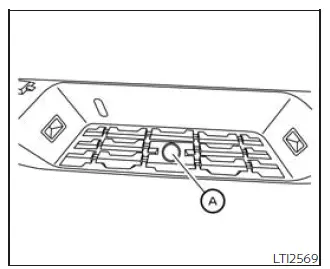
The Genuine NISSAN step bumper includes provisions for installing a trailer hitch ball and is designed for towing trailers with a maximum weight of 3,500 lbs. (1,588 kg).
To install a trailer hitch ball, cut out the circular section in the center of the step bumper A, then remove that section to install the trailer hitch ball securely.
Weight carrying hitches
A weight-carrying hitch, also called a "dead weight" ball mount, is designed to carry the full trailer tongue weight and gross trailer weight directly on the ball mount and receiver. When using this type of hitch with the Nissan Frontier, always confirm that the hitch rating, trailer weight, and tongue load remain within the approved limits before driving.
Weight distribution hitch
This type of hitch is also known as a "load-leveling" or "equalizing" hitch. It uses a set of spring bars that connect to the ball mount and the trailer to help distribute trailer tongue weight, also called hitch weight, more evenly through the Nissan Frontier and trailer combination. Many vehicles cannot safely carry the entire tongue weight of certain trailers directly at the rear, so part of that weight must be transferred through the frame toward the front wheels. This helps improve stability, steering response, braking balance, and overall towing control.
A Class IV weight-distributing hitch system is recommended when towing trailers with a maximum weight greater than 5,000 lbs. (2,268 kg) with the Nissan Frontier. Check with the trailer manufacturer and the towing equipment manufacturer to confirm whether a weight-distributing hitch system is recommended or required for your trailer and load.
NOTE:
A weight-distributing hitch system may affect the operation of trailer surge brakes. If you are planning to use a weight-distributing hitch system with a trailer equipped with surge brakes, contact the surge brake manufacturer, hitch manufacturer, or trailer manufacturer to confirm whether this setup is permitted and how it should be installed safely.
Always follow the instructions supplied by the manufacturer for installing, adjusting, and using the weight-distributing hitch system.
General set-up instructions are as follows:
1. Park the unloaded Nissan Frontier on a level surface.
With the ignition switch in the ON position and the doors closed, allow the vehicle to stand for several minutes so it can settle and level properly before taking measurements.
2. Measure the height of a reference point on the front and rear bumpers at the center of the vehicle.
3. Attach the trailer to the Nissan Frontier and adjust the hitch equalizers so the front bumper height is within 0 - .5 inches (0 - 13 mm) of the reference height measured in step 2. The rear bumper must not be higher than the reference height measured in step 2.
WARNING
Adjust the weight-distributing hitch correctly so the rear bumper is not higher than the measured reference height after the trailer is attached. If the rear bumper sits higher than the measured reference height when loaded, the Nissan Frontier may handle unpredictably. This can cause loss of vehicle control and may result in serious personal injury or property damage.
Sway control device
Sudden steering inputs, emergency maneuvers, strong wind gusts, rough roads, and buffeting from passing trucks or large vehicles can affect trailer stability. A sway control device may be used to help manage these effects and improve towing confidence. If you choose to use one, consult a reputable trailer hitch supplier to confirm that the sway control device is compatible with the Nissan Frontier, the hitch, the trailer, and the trailer brake system.
Follow all manufacturer instructions for properly installing, adjusting, and using the sway control device.
Class I hitch
Class I trailer hitch equipment, including the receiver, ball mount, and hitch ball, can be used to tow trailers with a maximum weight of 2,000 lbs. (907 kg).
Class II hitch
Class II trailer hitch equipment, including the receiver, ball mount, and hitch ball, can be used to tow trailers with a maximum weight of 3,500 lbs. (1,587 kg).
The Genuine NISSAN step bumper is considered a Class II ball mount.
Class III hitch
Class III trailer hitch equipment, including the receiver, ball mount, and hitch ball, can be used to tow trailers with a maximum weight of 5,000 lbs. (2,268 kg).
Class IV hitch
Class IV trailer hitch equipment, including the receiver, ball mount, and hitch ball, can be used to tow trailers with a maximum weight of 10,000 lbs. (4,535 kg). A weight-distributing hitch should be used when towing trailers weighing more than 5,000 lbs. (2,268 kg). Before towing with the Nissan Frontier, always confirm that the hitch class, trailer weight, tongue load, safety chains, wiring, and braking system are properly rated for the actual load.
Your Nissan Frontier may be equipped with Class IV trailer hitch equipment that carries a maximum hardware rating of 10,000 lbs. (4,535 kg). However, this does not automatically mean the vehicle can tow that amount. The actual towing capability of the Nissan Frontier is limited to the maximum trailer weights specified in the "Towing Load/Specification" chart found in this section. Always follow the vehicle-specific towing ratings rather than the rating stamped on the hitch equipment.
CAUTION
- Special trailer hitches that include frame reinforcements are required when towing loads above 2,000 lbs. (907 kg). Genuine NISSAN trailer hitches, ball mounts, and hitch balls specifically designed for Nissan Frontier pickup trucks and sport utility vehicles are available through authorized NISSAN dealers and are engineered to meet the vehicle's towing requirements.
- The trailer hitch must not be attached to, interfere with, or affect the operation of the vehicle's impact-absorbing bumper system.
WARNING
- Do not use axle-mounted trailer hitches on the Nissan Frontier.
- Do not modify the exhaust system, brake system, frame structure, suspension components, or any other vehicle systems in order to install a trailer hitch.
- To help reduce the possibility of additional damage in the event of a rear-end collision, remove the ball mount from the receiver when it is not being used whenever practical.
- Inspect all trailer hitch mounting hardware regularly and verify that every mounting bolt remains properly tightened and securely attached.
Tire pressures
- When towing a trailer with your Nissan Frontier, inflate all vehicle tires to the recommended cold tire pressures shown on the Tire and Loading Information label.
- The condition, size, load rating, and inflation pressure of the trailer tires should always comply with the specifications provided by the trailer manufacturer and tire manufacturer.
Safety chains
Always use properly rated safety chains between the Nissan Frontier and the trailer. The safety chains should be crossed underneath the trailer tongue and attached directly to the hitch assembly rather than to the vehicle axle or bumper. If the hitch ball is mounted to the bumper, the chains may be attached to the bumper as specified by the hitch manufacturer. Ensure there is enough slack in the chains to allow normal turning and maneuvering without binding, while still preventing the trailer tongue from contacting the ground if it becomes disconnected.
Trailer lights
CAUTION
When connecting trailer lighting to the Nissan Frontier electrical system, a commercially available power-type module/converter must be used. This device uses the vehicle battery as the primary power source for trailer lights while using the vehicle's tail lamps, brake lamps, and turn signal circuits only as control signals. The module/converter must draw no more than 15 milliamps from the stop lamp and tail lamp circuits. Using an incorrect module/converter or one that exceeds these electrical requirements may damage the vehicle electrical system. Consult a reputable trailer dealer to obtain the correct equipment and ensure professional installation.
Trailer lighting equipment must comply with all applicable federal, state, provincial, and local regulations. For assistance with trailer light wiring, it is recommended that Nissan Frontier owners consult an authorized NISSAN dealer or a qualified trailer equipment specialist. Vehicles equipped with the optional trailer tow package include a factory-installed 7-pin trailer harness connector. For vehicles not equipped with the tow package, a flat 4-pin harness is available through your NISSAN dealer. If the trailer uses a flat 4-pin connector, an adapter may be required to connect the trailer lighting system to the vehicle. Suitable adapters are commonly available from auto parts retailers and trailer hitch suppliers.
Trailer brakes
If the trailer is equipped with its own braking system, ensure that the system complies with all applicable regulations and has been installed correctly according to the brake manufacturer's specifications.
Nissan Frontier models equipped with a 7-pin trailer harness connector are pre-wired for the installation of a trailer brake controller. For proper integration and reliable operation, it is recommended that owners visit a NISSAN dealer to obtain a compatible trailer brake adapter harness. Properly functioning trailer brakes can significantly improve towing stability, reduce stopping distances, and enhance overall towing safety when operating the Nissan Frontier under heavy loads.
WARNING
Never connect a trailer brake system directly to the Nissan Frontier brake system. Trailer brakes must use the proper approved trailer brake equipment and wiring, not the vehicle’s hydraulic brake system.
When towing a trailer load of 3,500 lbs. (1587 kg) or more with your Nissan Frontier, trailers equipped with a brake system MUST be used. However, many states and local jurisdictions require a separate trailer braking system once the loaded trailer weight exceeds a specific limit. Before towing, confirm that the trailer complies with the regulations in your area and in every location where you plan to drive.
Several types of trailer braking systems are available, and the correct system depends on the trailer design, total loaded weight, and intended towing use.
Surge Brakes - The surge brake actuator is mounted on the trailer tongue, with a hydraulic line connected to each trailer wheel.
Surge brakes are activated when the trailer pushes forward against the hitch ball as the tow vehicle slows down. Hydraulic surge brakes are commonly used on rental trailers and some boat trailers. With this type of braking system, there is no electric or hydraulic brake-control connection between the Nissan Frontier and the trailer for brake operation.
Electric Trailer Brakes - Electric trailer braking systems are activated by an electronic signal sent from a trailer brake controller, which is a special brake-sensing module installed for towing. If electric trailer brakes are used with the Nissan Frontier, refer to "Electric trailer brake controller" for proper setup information.
Have a professional towing equipment supplier inspect the trailer brake installation, verify that the components are compatible with your Nissan Frontier towing setup, and demonstrate the correct method for testing trailer brake operation before driving.
Electric trailer brake controller
Trailers equipped with electric brakes may require installation of an aftermarket trailer brake controller.
A Genuine NISSAN jumper harness is available and is specifically designed for use when installing an aftermarket brake controller in compatible Nissan Frontier vehicles.
Install the aftermarket electric trailer brake controller exactly according to the manufacturer’s instructions, and confirm proper brake response before towing on public roads.
Pre-towing tips
- Make sure your Nissan Frontier remains level when a loaded or unloaded trailer is attached. Do not drive if the vehicle has an abnormal nose-up or nose-down position. Check for incorrect tongue load, overloading, worn suspension components, improper hitch height, or other possible causes.
- Always secure all items inside the trailer to prevent cargo from shifting while driving.
- Keep the cargo load as low as possible in the trailer to help maintain a low center of gravity and improve towing stability.
- Load the trailer so approximately 60% of the trailer load is positioned in the front half and 40% is positioned in the rear half. Also make sure the load is balanced from side to side.
- Check the hitch connection, trailer tire pressure, Nissan Frontier tire pressure, trailer light operation, safety chains, electrical connector, and trailer wheel lug nuts every time you attach a trailer to the vehicle.
- Make sure the rearview mirrors comply with all federal, state, provincial, or local regulations. If additional towing mirrors are required, install them before driving.
- Determine the overall height of the Nissan Frontier and trailer combination so you know the clearance required for bridges, garages, trees, signs, and low structures.
Trailer towing tips
To build skill and understand how the Nissan Frontier behaves while towing, practice turning, stopping, and backing up in a wide area away from traffic. Steering response, braking distance, acceleration, turning radius, and overall stability will feel different from normal driving without a trailer.
- Always secure items inside the trailer to prevent the load from shifting during travel.
- Lock the trailer hitch coupler with a pin or lock to help prevent the coupler from accidentally becoming unlatched while towing.
- Avoid abrupt starts, sudden acceleration, hard braking, and aggressive throttle input.
- Avoid sharp turns, sudden lane changes, and quick steering corrections, especially at higher speeds.
- Always drive your Nissan Frontier at a moderate and controlled speed when towing.
- When backing up, hold the bottom of the steering wheel with one hand. Move your hand in the direction you want the trailer to move. Make small corrections, back up slowly, and, whenever possible, have another person guide you from a safe position outside the vehicle.
Always block the wheels of both the Nissan Frontier and the trailer when parking with a trailer attached. Parking on a slope is not recommended because the combined vehicle and trailer weight can place heavy stress on the transmission, brakes, and wheel blocks. However, if parking on an incline cannot be avoided, follow the procedure below carefully:
CAUTION
If you move the shift lever to the P (Park) position before the wheels are blocked and the parking brake is applied, transmission damage may occur because the full vehicle and trailer load can rest against the parking mechanism.
1. Apply and hold the brake pedal firmly.
2. Have another person place wheel blocks on the downhill side of both the Nissan Frontier wheels and the trailer wheels.
3. After the wheel blocks are correctly positioned, slowly release the brake pedal until the blocks absorb the weight of the vehicle and trailer combination.
4. Apply the parking brake securely.
5. Shift the transmission into P (Park).
6. Make sure the 4WD shift indicator light, if so equipped, shows that the transfer case is in 4H, 4LO, or 2WD and that the ATP light is off. If the 4WD shift indicator light is flashing, or the ATP light is ON, make sure the transmission is in P (Park), then turn the 4WD switch to 2WD or 4H.
7. Turn off the engine.
To drive away:
1. Start the Nissan Frontier.
2. Apply and hold the brake pedal.
3. Shift the transmission into gear.
4. Release the parking brake.
5. Drive forward slowly until the vehicle and trailer are clear of the wheel blocks.
6. Apply and hold the brake pedal again.
7. Have another person retrieve the wheel blocks and store them safely before continuing.
- When driving downhill, the weight of the trailer pushing against the Nissan Frontier can reduce overall
stability and make the vehicle harder to control. To maintain better control, reduce speed before the
descent and shift to a lower gear. Avoid long or repeated brake application when traveling downhill,
because excessive brake use can reduce braking effectiveness and may cause overheating.
Using a lower gear provides engine braking and reduces the need for frequent brake pedal application.
- If the engine coolant temperature rises to an excessive level, refer to "If your vehicle overheats" and take appropriate action immediately.
- Trailer towing requires more fuel than normal driving because the Nissan Frontier must move additional weight and overcome greater rolling and aerodynamic resistance.
- Avoid towing a trailer during the first 500 miles (805 km) of vehicle operation.
- For the first 500 miles (805 km) that you tow a trailer, do not drive faster than 50 mph (80 km/h).
- Have the vehicle serviced more frequently than the standard maintenance intervals when it is used for towing. For additional information, refer to the "Maintenance and schedules" section of this manual.
- When turning, the trailer wheels track closer to the inside of the turn than the Nissan Frontier wheels. To compensate, make a wider turn than usual and allow additional clearance from curbs, poles, vehicles, and other obstacles.
- Crosswinds, uneven roads, rough pavement, and air pressure from passing large vehicles can negatively affect vehicle and trailer handling and may cause trailer sway. When larger vehicles pass, be prepared for sudden changes in wind pressure that can affect the stability of the Nissan Frontier and trailer combination.
Do the following if the trailer begins to sway:
1. Remove your foot from the accelerator pedal and allow the vehicle to coast while steering as straight ahead as road and traffic conditions allow. This action can help the Nissan Frontier and trailer combination stabilize gradually.
- Do not attempt to correct trailer sway by sharp steering input or by suddenly applying the brakes.
2. After the trailer sway has stopped, apply the brakes gently and smoothly, then pull off the road in a safe area where the Nissan Frontier and trailer can be inspected without blocking traffic.
3. Recheck the trailer load and rearrange the cargo so the weight is balanced as described in this section. Proper weight distribution can help reduce sway and improve overall towing stability.
- Use extra caution when passing other vehicles.
Passing while towing a trailer requires significantly more distance than normal driving. Remember that the full length of the trailer must also clear the other vehicle before you can safely return to your lane.
- When driving down long or steep hills with the Nissan Frontier, shift the transmission to a lower gear to use engine braking. This helps slow the vehicle and trailer combination without relying only on the service brakes.
- Avoid pressing and holding the brake pedal for long periods or applying the brakes too frequently. Excessive brake use can cause overheating and may reduce braking efficiency.
- Increase your following distance because stopping distances are longer when towing a trailer. Anticipate traffic changes early and brake gradually whenever possible.
- NISSAN recommends that cruise control not be used while towing a trailer, because towing conditions often require more frequent speed adjustments.
- Some states or provinces have special regulations and speed limits for vehicles towing trailers. Always obey the local towing laws and posted speed limits.
- Check the hitch connection, trailer wiring harness connections, safety chains, and trailer wheel lug nuts after the first 50 miles (80 km) of travel and again at every rest stop or break.
- When launching a boat with your Nissan Frontier, do not allow the water level to rise above the exhaust tail pipe or rear bumper.
- Disconnect the trailer lights before backing the trailer into the water. If the trailer lights remain connected and become submerged, they may burn out or suffer electrical damage.
When towing a trailer, final drive gear oil should be replaced and transmission oil/ fluid should be changed more frequently.
For additional information, refer to the "Do-it-yourself" section in this manual.
Tow mode (if so equipped)
Using tow mode is recommended when pulling a heavy trailer or carrying a heavy load with the Nissan Frontier. Press the TOW MODE switch to activate tow mode. The indicator light on the TOW MODE switch illuminates when tow mode is selected. Press the TOW MODE switch again to turn tow mode off. Tow mode is automatically canceled when the ignition switch is turned off.
Tow mode includes the following features:
- Grade logic - Adjusts transmission shift patterns when the Nissan Frontier is pulling a trailer or carrying a load up a grade, helping maintain smoother power delivery.
- Downhill Speed Control (DSC) - Automatically downshifts when driving down a grade with a trailer or heavy load to help control vehicle speed and reduce the need for continuous brake application.
Driving the Nissan Frontier in tow mode without a trailer or with only a light trailer or light load will not damage the vehicle. However, fuel economy may be reduced, and the engine or transmission response may feel different from normal driving.
When towing a trailer, final drive gear oil should be replaced and transmission oil/ fluid should be changed more frequently.
For additional information, see the "Do-it-yourself" section of this manual.
As an additional towing practice, inspect the trailer, hitch, brakes, lights, and tire pressures before every trip. Careful preparation helps the Nissan Frontier tow more smoothly and reduces the chance of problems during long-distance travel.